
The Evolution of the Digital Hospital
As the healthcare sector undergoes a profound digital transformation, hospitals have emerged as the primary proving ground for artificial intelligence. Far from the theoretical simulations of the lab, clinical environments are providing the ultimate stress test for AI’s ability to improve patient outcomes, streamline operations, and reduce clinician burnout. However, this real-world implementation is also exposing the technology’s current boundaries.
The Successes: Streamlining Documentation and Early Detection
One of the most immediate wins for AI in healthcare is the reduction of the ‘administrative tax’ on physicians. Generative AI tools are now being used to transcribe patient visits in real-time, converting natural conversations into structured medical notes. This allows doctors to focus on the patient rather than the screen.
Beyond administration, predictive analytics are making significant strides in clinical settings:
- Sepsis Prediction: AI algorithms monitor vital signs to alert staff of potential sepsis hours before clinical symptoms manifest.
- Triage Optimization: Machine learning models assist in prioritizing emergency room patients based on the severity of their data points.
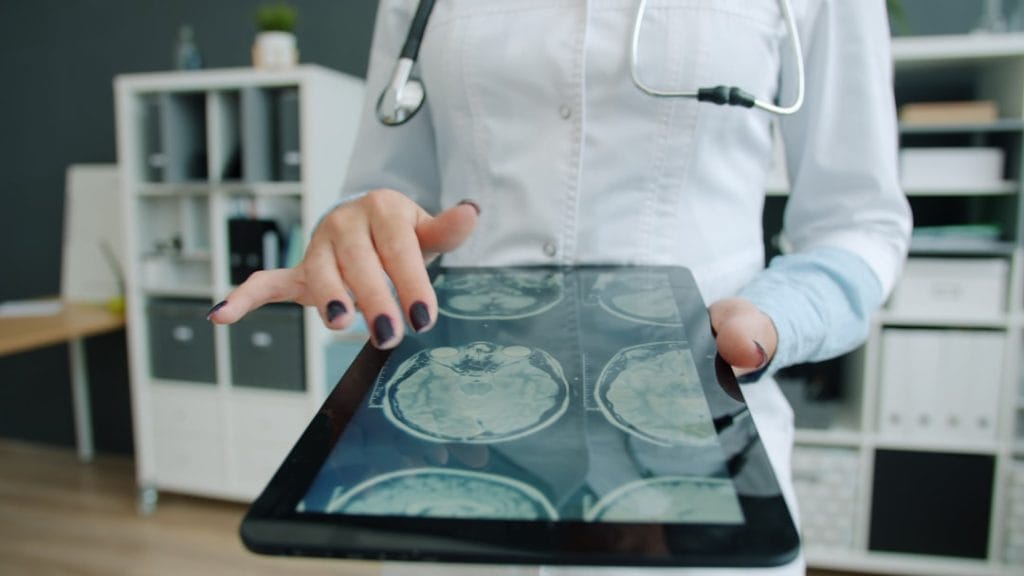
- Radiology Assistance: Computer vision tools act as a second set of eyes for radiologists, flagging potential anomalies in X-rays and MRIs with high precision.
The Challenges: Hallucinations and the Human Element
Despite these advancements, the integration of AI is not without significant hurdles. ‘Hallucinations’—the tendency of LLMs to generate plausible but incorrect information—remain a critical risk in a field where accuracy is a matter of life and death. Medical professionals have noted that while AI can summarize a patient’s history, it may occasionally omit critical contraindications or misinterpret nuanced symptoms.
Furthermore, AI lacks the emotional intelligence and contextual judgment required for complex bedside care. The ‘black box’ nature of some algorithms also poses an ethical dilemma; if a physician cannot explain the reasoning behind an AI-driven recommendation, they face challenges in both patient communication and legal accountability.
The Path Forward: Human-in-the-Loop
The consensus among health tech experts is that AI will not replace clinicians, but rather augment them. The most successful implementations involve a ‘human-in-the-loop’ model, where AI handles data processing and preliminary analysis, while the final clinical decision remains with the human expert. As hospitals continue to iterate on these systems, the focus is shifting from ‘can we use AI?’ to ‘how do we use AI safely and equitably?’
The lessons learned in today’s wards will define the next decade of medical informatics, establishing the benchmarks for what machines can—and should—do in the service of human health.